Not an obligation. The reason people come here.
The beauty of the La Maddalena archipelago is not permanent by default. It is the result of decades of protection, respected rules, and daily choices made by residents and visitors. Choosing how to experience this place is not a style preference: it is the condition that allows it to remain the same next summer.
Choosing an apartment in La Maddalena — instead of a resort outside the village or a motorboat rental all week — is already a lower-impact decision: local spending, more walking, and a rhythm linked to the territory rather than to a rigid program.
What the Park protects
The archipelago hosts ecosystems that do not exist elsewhere in the Mediterranean at this concentration. Posidonia oceanica meadows purify water and produce oxygen. Rocky seabeds around Caprera and Spargi are habitat for red gorgonians, lobsters, and dusky groupers. Coastal dunes on some minor beaches are among the last intact dune systems in northern Sardinia.
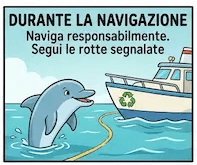
Marine life includes bottlenose dolphins in the Strait of Bonifacio, fin whales passing through the Pelagos Sanctuary, and sea urchins whose harvesting — even one specimen — is prohibited and fined.
The Code of Good Conduct
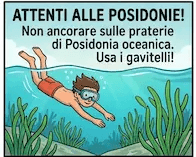
The Park Authority has formalised a Code of Good Conduct valid for everyone: residents, boaters, hikers, and divers. Core points cover anchoring (forbidden on Posidonia meadows), noise in stopover areas, collection of marine organisms, and trampling of coastal dunes.
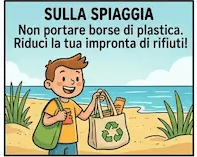
In practice: do not anchor where water looks light green (likely Posidonia below); do not take anything from water or rocks; do not cross marked dunes; take away all waste produced on boat or beach.
A plastic-free archipelago
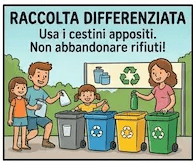
The "Un arcipelago senza plastica" project is a local initiative supported by the Park Authority and private operators. It includes separated waste collection across islands, reduction of single-use plastics in tourism services, and voluntary beach clean-up days organised each season.
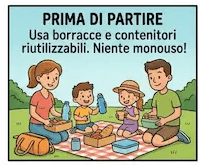
In our apartments we provide reusable water bottles and information on waste collection points in the village. Recycling on the main island works well: glass, paper, plastic, and organic waste are collected separately.
SEAME Sardinia and seabed monitoring
SEAME Sardinia is a scientific project that monitors marine ecosystems in the archipelago. Research data is used to update Park zoning maps and adapt access rules to real seabed conditions. Taking part — even just reporting unusual marine wildlife sightings — contributes to the shared database.
Jellyfish, sea urchins, and starfish
Jellyfish appear mostly in August, especially in weeks with rough Scirocco seas: Pelagia noctiluca (the purple luminescent one) and Cotylorhiza tuberculata (the "fried-egg" jellyfish, non-stinging). Neither should be touched.
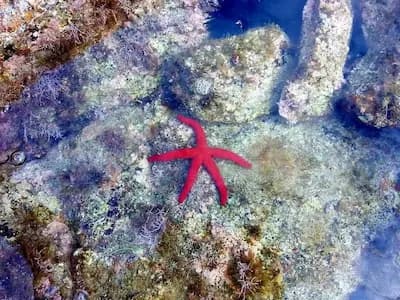
Sea urchins on rocks must not be collected: beyond the legal ban, removing them unbalances seabed ecology. Starfish should not be handled or taken out of water: even one minute in open air can be fatal.
Why an apartment is the most coherent choice
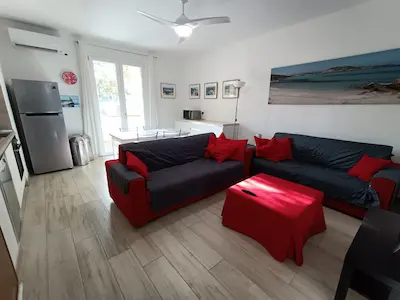
An apartment in the village has a radically different footprint than a large resort or a motorboat burning fuel every day. You shop at the local market, cook with island products, and walk instead of driving. It is not a militant choice: it is simply the best way to live this territory.
Isola, Madda, and Lena are designed for this: for people who want the Park, not just a postcard of the Park.