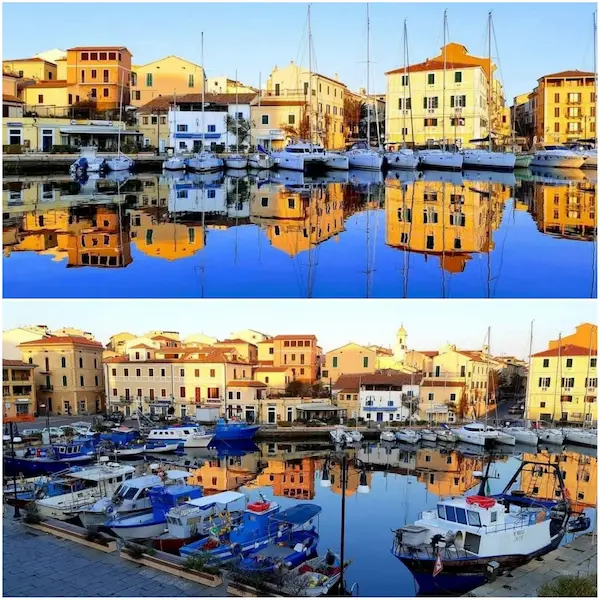
A harbour that is a true starting point
La Maddalena is not a stop: it is the centre from which you reach all the others. Cala Gavetta, the main harbour, is where everything begins and ends - where fishing boats return in the morning, where ferries from Palau unload passengers, where sailing boats moor for aperitivo. It is not a postcard harbour: it is a working harbour. You feel the difference.
The island has an irregular shape, stretched north-west to south-east, with a coastline alternating protected bays and exposed granite headlands. The ring road covers almost all of it: you can cycle around the whole island in just over two hours, stopping where the landscape asks you to - and it asks often.
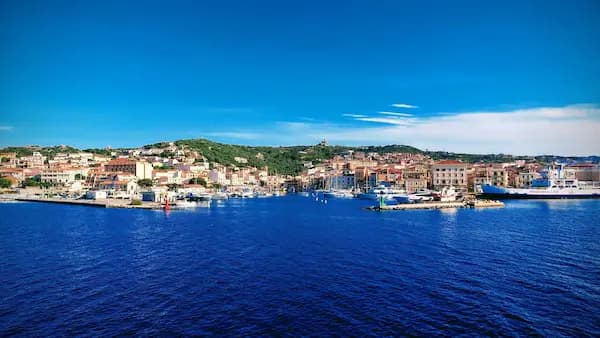
The historic village
La Maddalena town centre is walkable in twenty minutes. Narrow streets behind the waterfront hide historic bars, small shops, and a few taverns without bright signs. Piazza Umberto I is the gravity point: in the evening, the walk from here to Cala Gavetta and back is the island's social ritual, lively without being chaotic. You do not need a guide to orient yourself: follow the people walking slowly.
The morning market - in the main square, active from June to September in early hours - is where you understand island seasonality better than on any website. Fruit from the Gallura countryside, small-scale fresh fish, local pecorino and ricotta. Arrive between 7:30 and 9:00 and you find everything; after 10:00, it is mostly over.
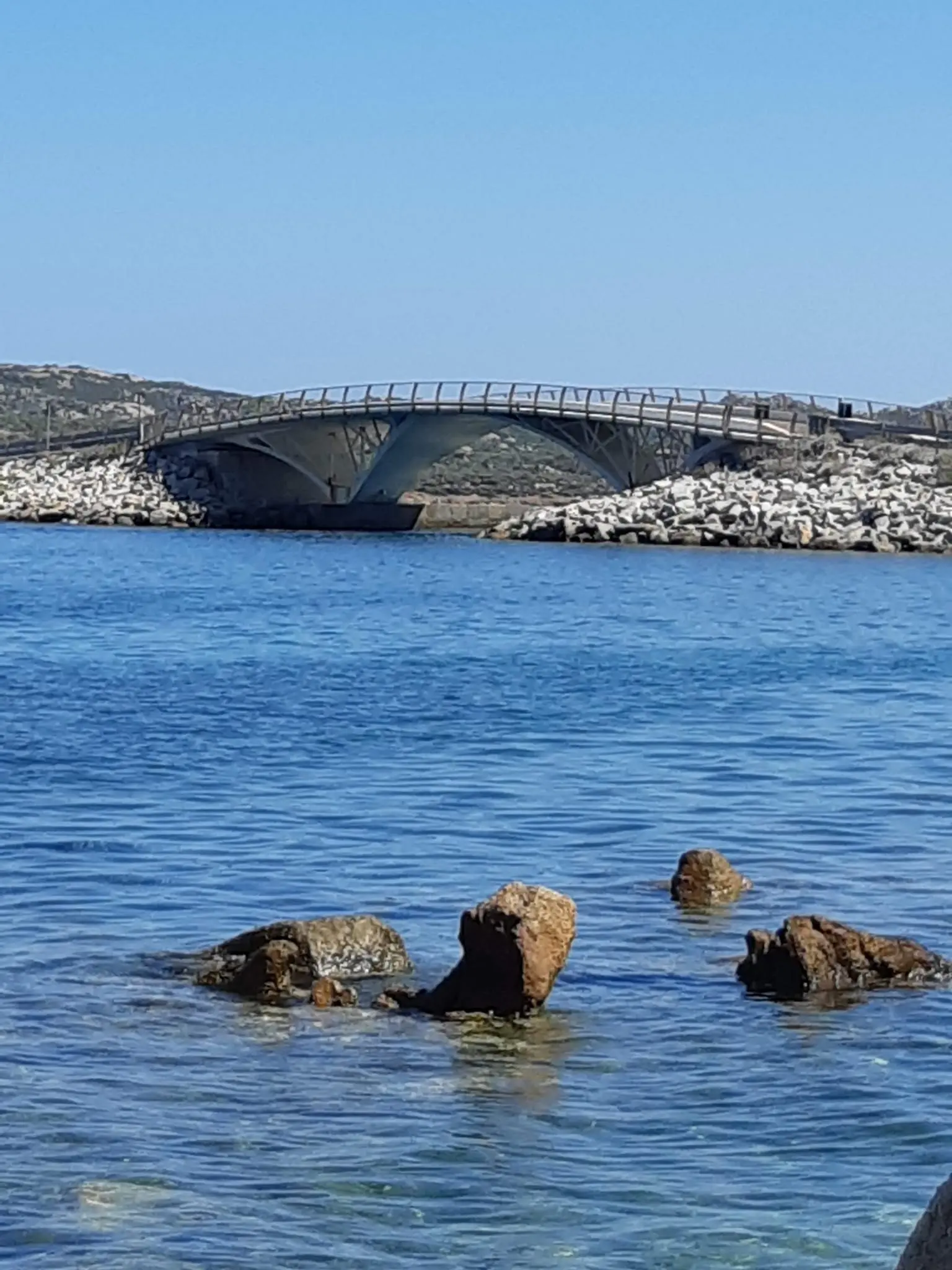
Passo della Moneta
Crossing Passo della Moneta means following the thin blue line that separates the main island, La Maddalena, from wild Caprera. Since 1890, people have tried to connect these two lands: first with a rotating iron bridge designed to let boats pass, then with the historic 1974 Bailey structure.
Today the connection has evolved into a modern engineering work inside the heart of La Maddalena Natural Park. The new road bridge spans 52 metres in three sections: a 25-metre central span and two 13.5-metre side spans. Open the Caprera Bridge PDF
Beaches on the main island
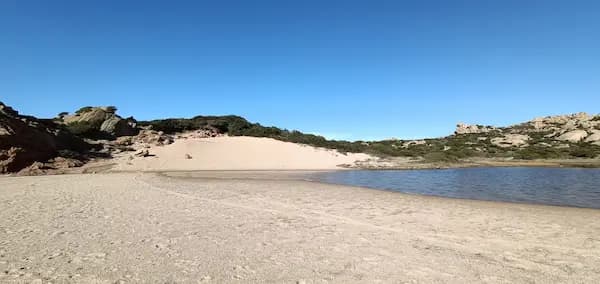
Bassa Trinita, on the northern side, is the most accessible beach: fine sand, shallow bottom, and naturally sheltered from Scirocco by island geometry. It works for families, for an early swim before market, for anyone who wants sea without boat or trail. Cala Spalmatore, further west, has pink granite edges and water that clears with Mistral: it is the beach locals prefer during windy weeks. Porto Massimo, on the north-east side, is where water stays calmer - sheltered by the headland and protected from main winds - chosen by people who know the island well enough to avoid main beaches in August.
Guardia Vecchia
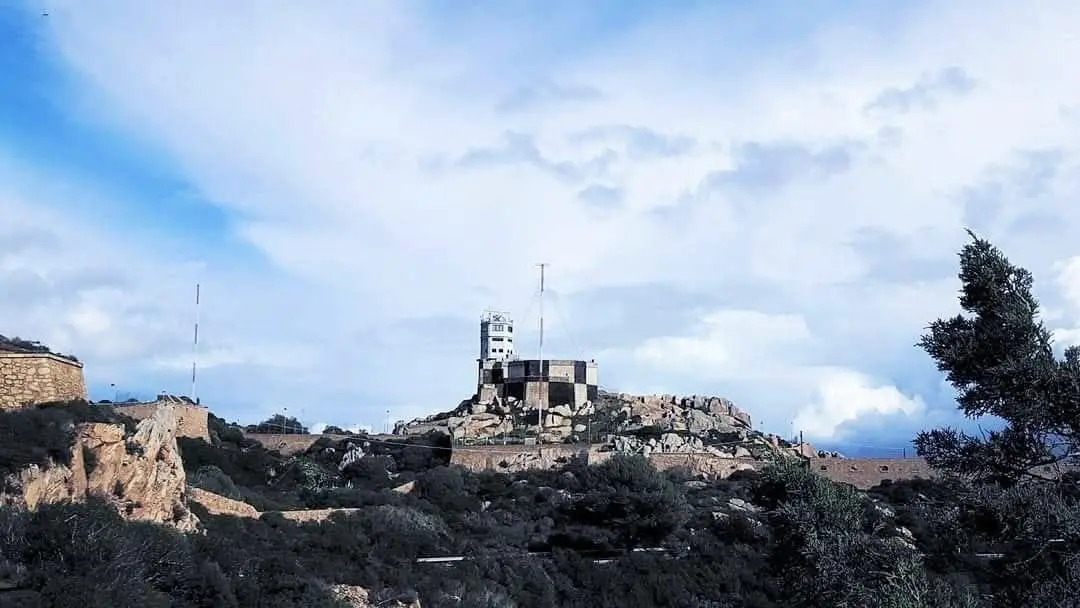
The highest point of the island - 150 metres above sea level - hosts a 19th-century lighthouse visible from Corsica on clear days. The path climbs from behind town through Mediterranean scrub and wind-shaped granite blocks. At the top, the archipelago arranges itself around you in an unexpected way: Caprera to the east connected by bridge, Spargi to the west, Budelli and Razzoli further out. This is where you understand why this archipelago is what it is: not random islands, but one coherent system of granite and water.