
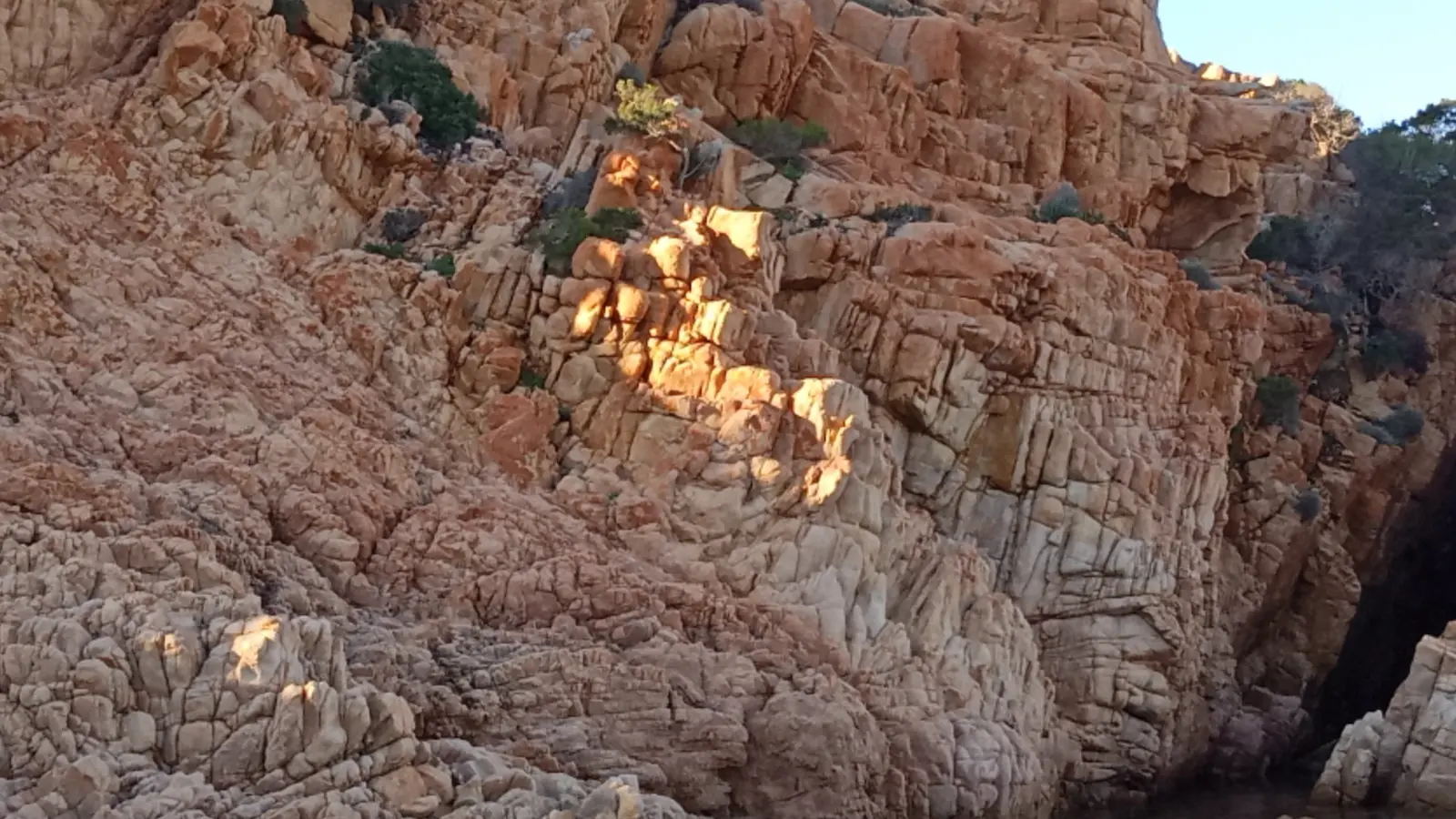
The subject is light, not landscape
Anyone who photographs the La Maddalena archipelago learns this fast: landscape is everywhere, but light is only available at certain moments and in certain places. Coming home from Sardinia with mediocre photos of one of the Mediterranean’s most beautiful places is possible — it happens every time you shoot at noon in August with the sun overhead flattening every texture and oversaturating every colour.
The archipelago is extraordinary for photography for two structural reasons: granite and sea. Pink granite — Precambrian orthogneiss, translucent in grazing light — responds to light in ways travertine or limestone do not. Water, with its colour layers from surface turquoise to deep blue, changes composition every hour of the day. Knowing when and where these two meet at their best is the only technique that really matters.
Punta Tegge: granite at dawn
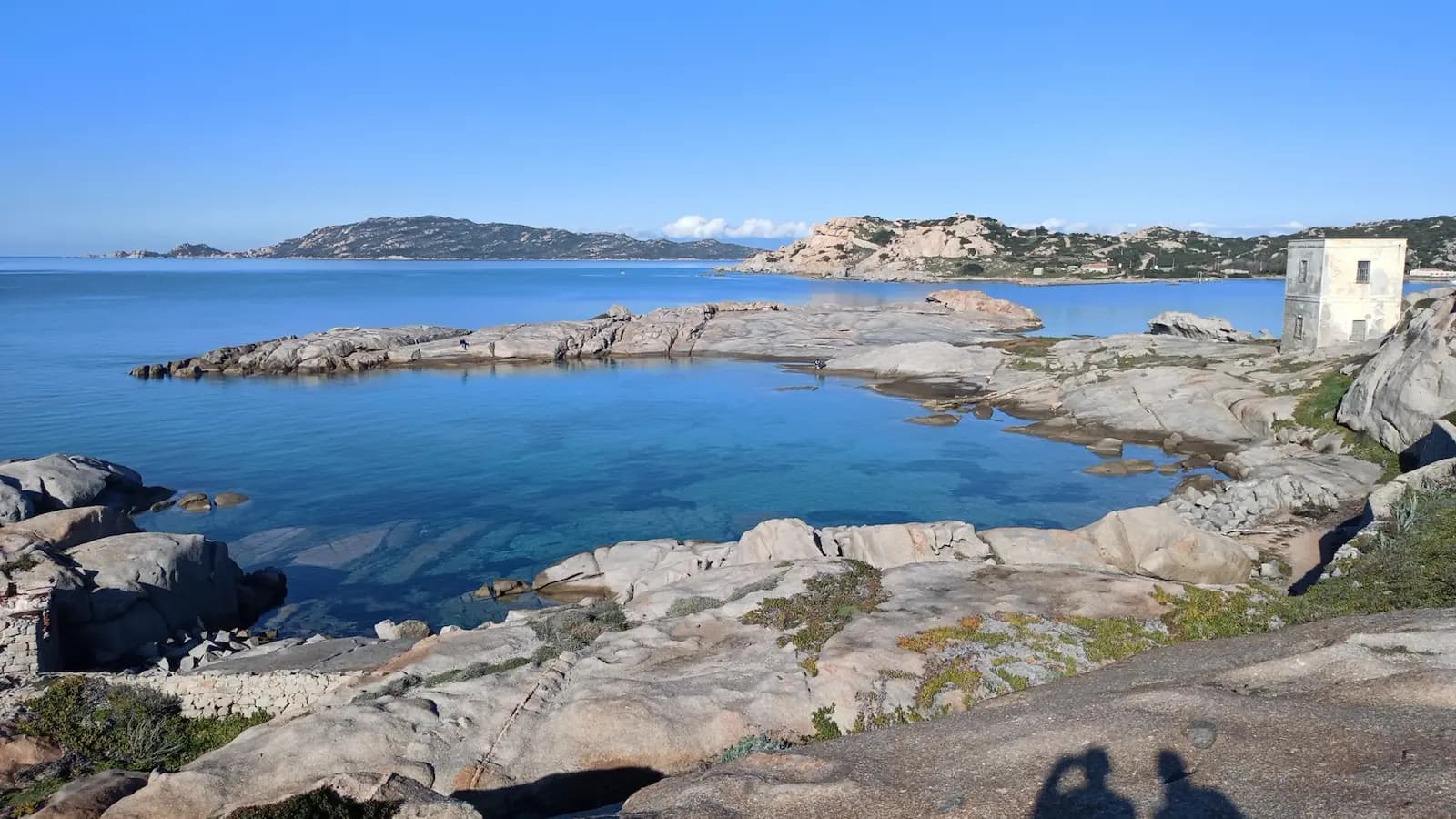
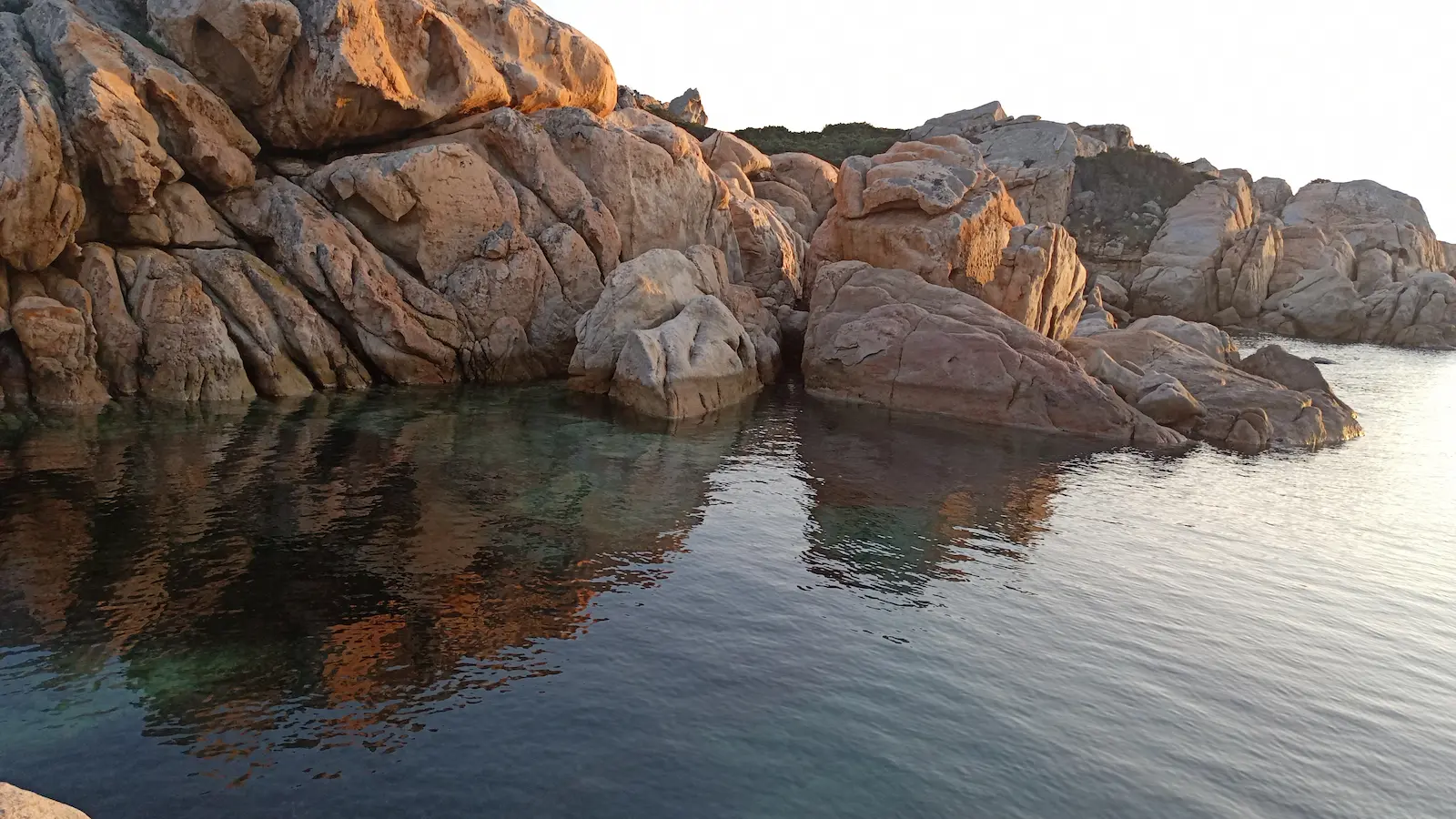
Punta Tegge is where the main island’s granite shows its best face. The beach faces east-north-east; in the first hours of the day, from about half an hour before sunrise to about an hour after, grazing light hits the rounded granite surfaces from an angle that reveals texture: honey-coloured feldspar crystals, translucent quartz, mica veins that catch the light like tiny mirrors.
In these conditions the granite is not pink: it is warm orange, almost amber, with blue shadows in hollows. That combination lasts sixty minutes at most. After that, as the sun rises, granite returns to its daytime colour — beautiful, but without the sculptural quality low light creates.
To be at Punta Tegge at dawn from the apartment: twenty minutes on foot from the centre, ten by bike. The hour is worth the early alarm.
Cala Coticcio: “Little Tahiti” on Caprera
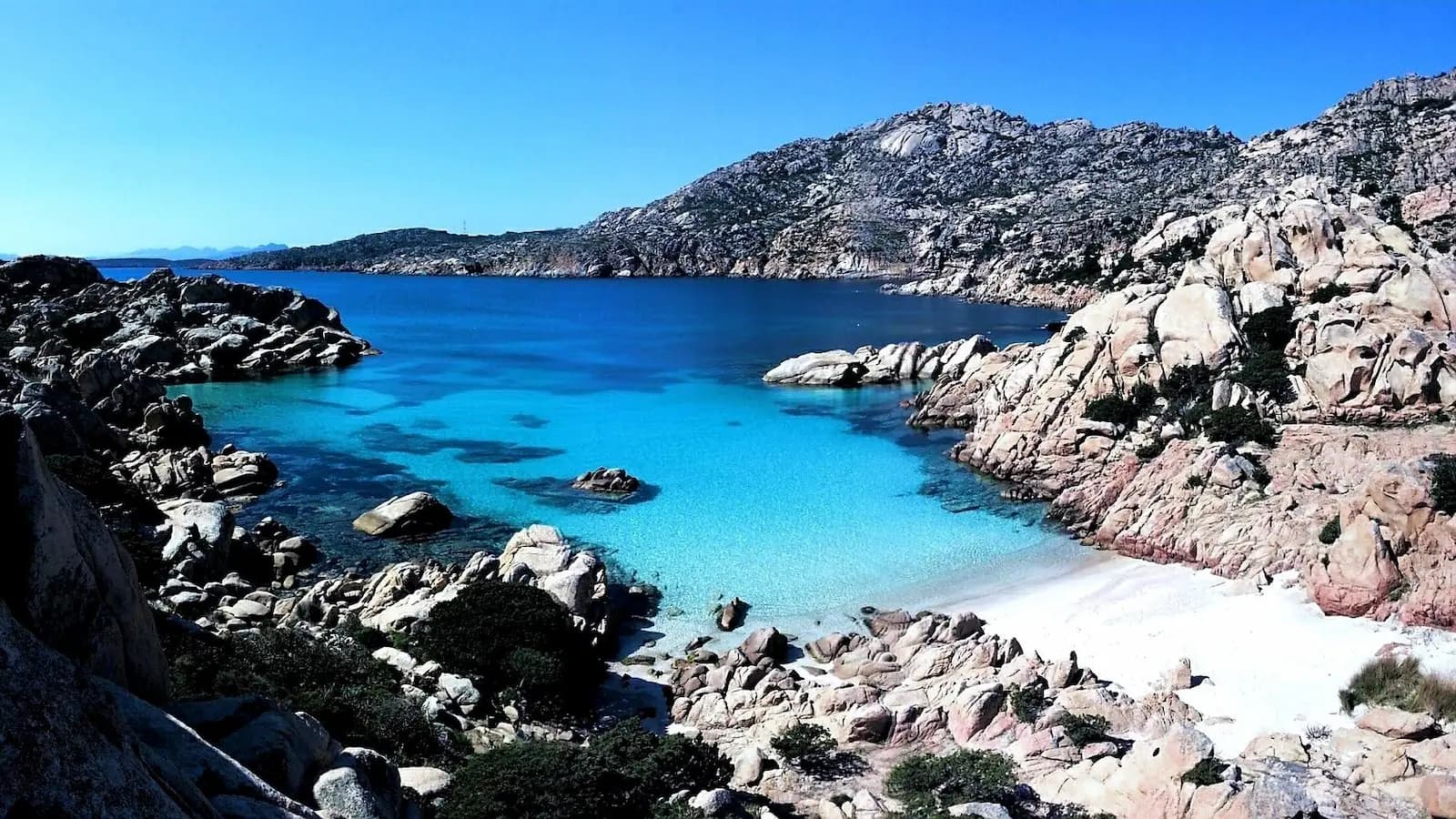
Cala Coticcio is a jewel of north-east Sardinia. Inside the La Maddalena National Park on Caprera, it is famous for the colour contrast between pink granite rocks, very white sand, and sea so turquoise it earned the nickname “Little Tahiti.”
🛑 Access rules and protection Classified as a maximum-protection zone (TA), the cove is a fragile ecosystem. To preserve it, the park authority applies strict rules:
Limited numbers: Access is capped per day, in time slots.
Guide required: You cannot walk the trail alone. Land access must be with an authorised environmental hiking guide (GAE).
Booking: You must book in advance through official park or municipality channels, paying the entry ticket and guide service.
🥾 How to get there Two main ways, each with different character:
1. By land (trekking) The trail is immersive in Mediterranean scrub but needs preparation:
Route: About 3.2 km round trip. Time: 45–60 minutes each way. Difficulty: Moderate, uneven sections. Gear: Closed hiking or sports shoes and plenty of water are essential.
2. By sea Many boats leave from Palau or La Maddalena. It is the most panoramic option, but boats must respect marker buoys and cannot approach the shore — to protect pristine seabeds.
Expert tip: Book well ahead in summer (July and August); places sell out fast.
Guardia Vecchia: sunset toward Corsica
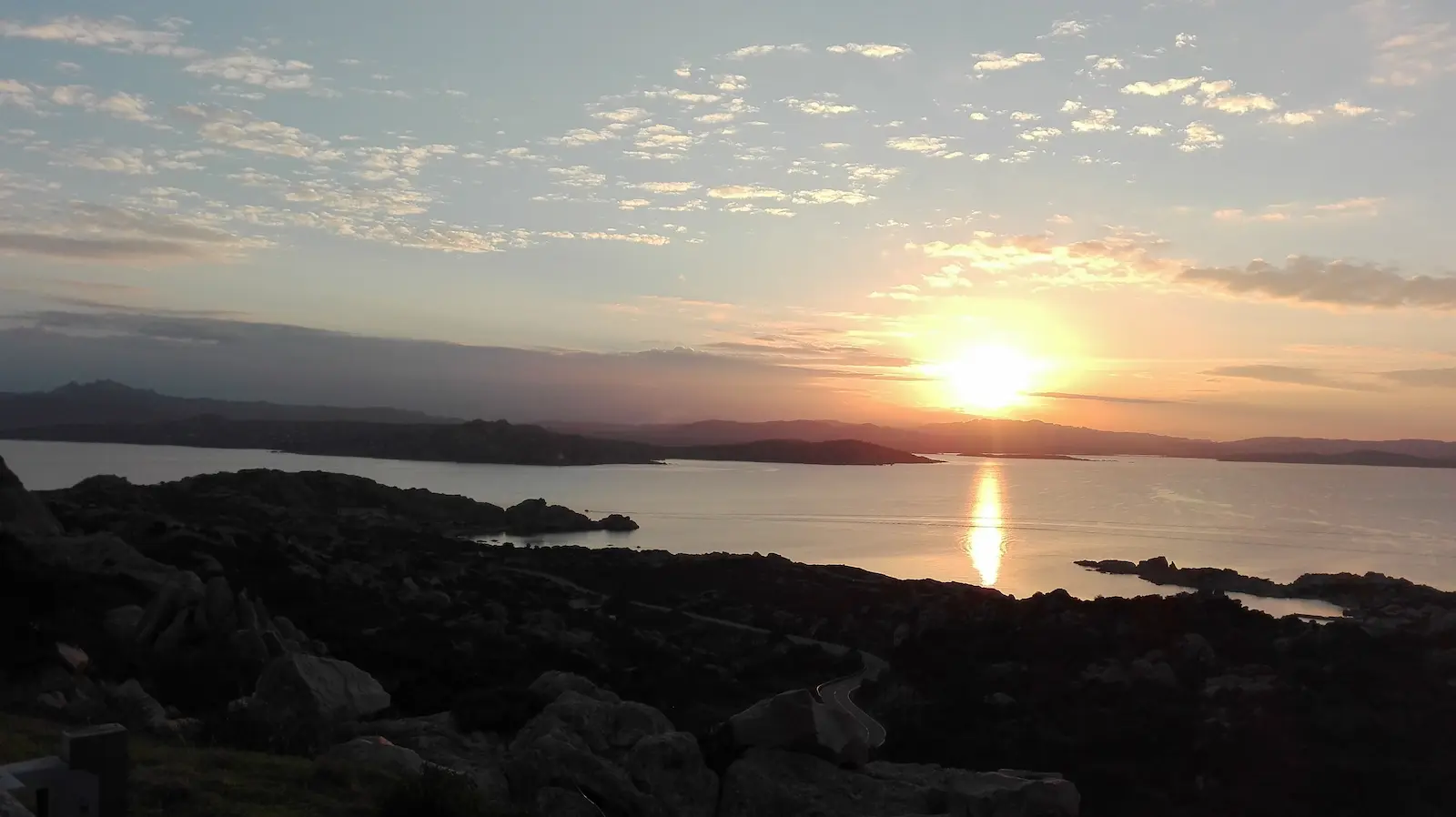
The Guardia Vecchia lighthouse sits at the highest point of the main island, about 150 m above sea level, facing west. That means it looks straight toward Corsica and the Strait of Bonifacio — with the sun setting in that direction from May to July.
The composition from the hill edge is classic: the 19th-century lighthouse in silhouette (or three-quarter view if you move a few metres), Corsican mountains as a backdrop, sea changing colour every five minutes in the hour before sunset. Horizontal grazing light in those hours hits granite from the opposite direction to dawn — west instead of east — with the same sculptural quality and warmer, redder tones.
The issue at Guardia Vecchia at sunset is crowds in August: the path is well known. The fix is to arrive an hour before sunset, when day-trippers have not yet climbed and light is already good.
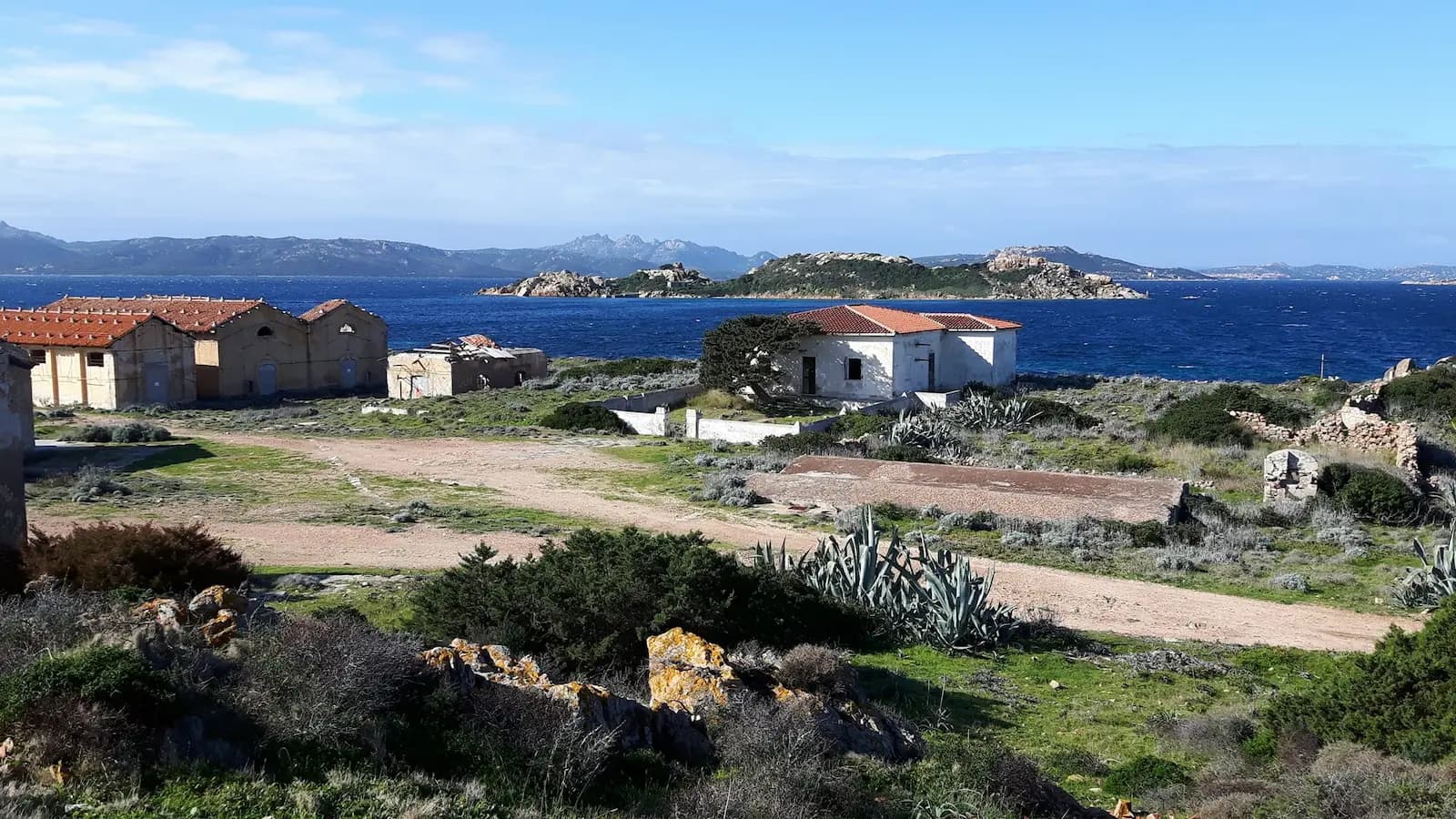
Punta Rossa battery on Caprera
Punta Rossa battery: history and atmosphere on Caprera At the far south of Caprera, the Punta Rossa battery is one of the most imposing and atmospheric military complexes in the archipelago — where coastal defence history meets wild Sardinian nature.
🏛️ History and features Built in 1866, it guarded the coast and naval supply until the end of the Second World War. Used for navy exercises until 2010, today the site sits in fascinating decay.
The complex: An old fortress with tunnels, passages, barracks, and a former torpedo station.
Architecture and nature: Ruins blend with red rocks and crystal water for a unique visual contrast.
Today: Declared of cultural interest in 2018, it is an ever-changing open-air museum, loved by photographers and urban explorers.
📍 How to get there Reach Caprera: Cross the bridge from La Maddalena. Head south: Follow unpaved roads beyond Cala Andreani. On foot: Leave the car and walk toward the southern tip on paths toward the torpedo station.
✨ What to see Beyond the panorama, notice the military details:
Gun emplacements: Large structures overlooking the sea. Sheds and sentry box: Traces of old logistics. Punta Rossa beach: A small inlet nearby, known for very pale grey sand and clear water.
Safety note: Because of decay and possible collapse, explore ruins with great care.
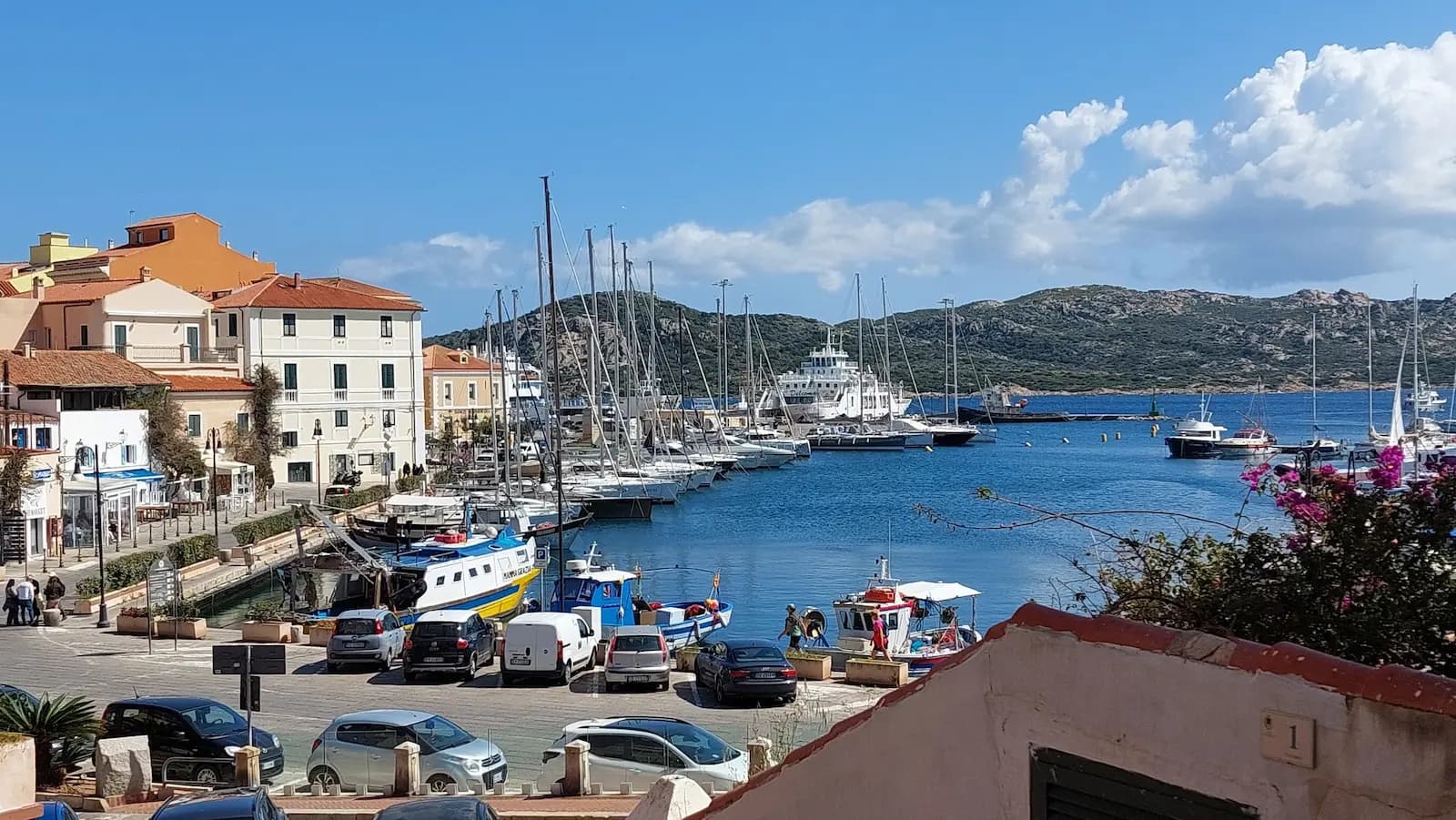
Cala Gavetta harbour: reportage photography
Cala Gavetta does not have dramatic granite light or Caprera water colours. It has something harder to find: the daily rhythm of a working harbour. Fishing boats returning at dawn, tour boats leaving at nine, the Saremar ferry loading and unloading every few hours.
Harbour photography is patience and discretion — not gear. The best time is early morning (before seven), when light is low on the pier and port life is not yet mixed with tourism. A quiet camera and a few calm hours produce images August beaches do not give.
Technical notes
Archipelago light is strong — in summer, even in the “golden hours,” ambient brightness is high. A polarising filter is essential for water photography: it cuts surface glare and lets you see the bottom even in partial backlight. A wide angle (16–24 mm full frame) handles granite–sea–sky compositions without compromise. For harbour and activity shots, a normal 35–50 mm is enough.
The hours to avoid for landscape photography are the same as for hiking: eleven to four in July and August. It is not only comfort: summer zenith light is almost unusable for any subject except water in specific conditions like Cala Coticcio.